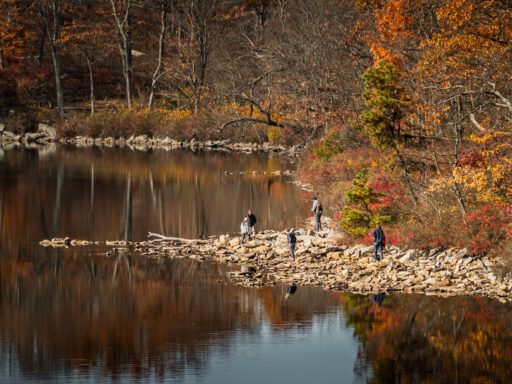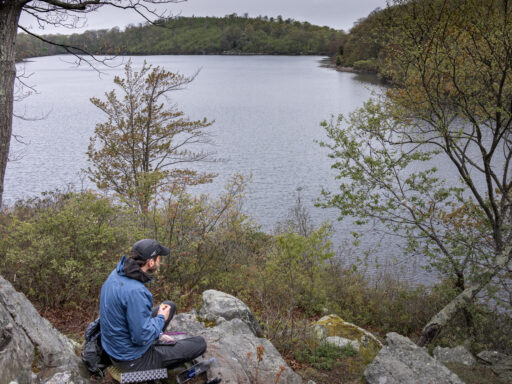

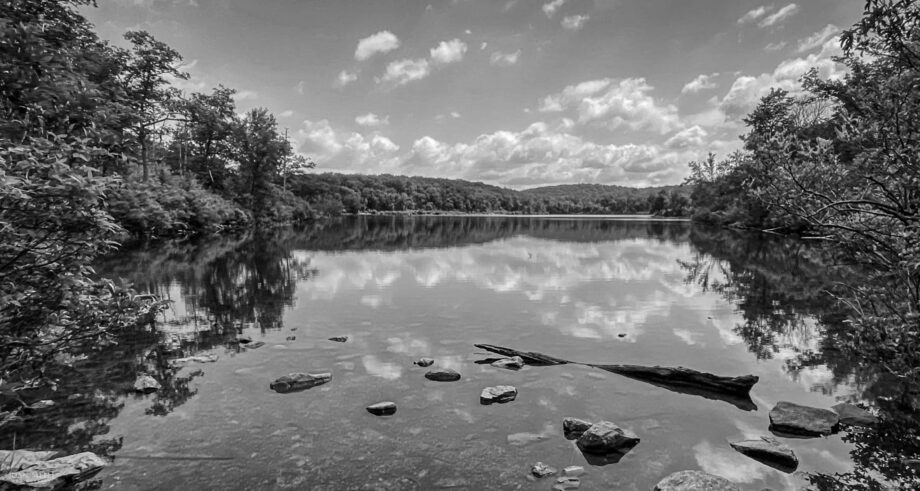
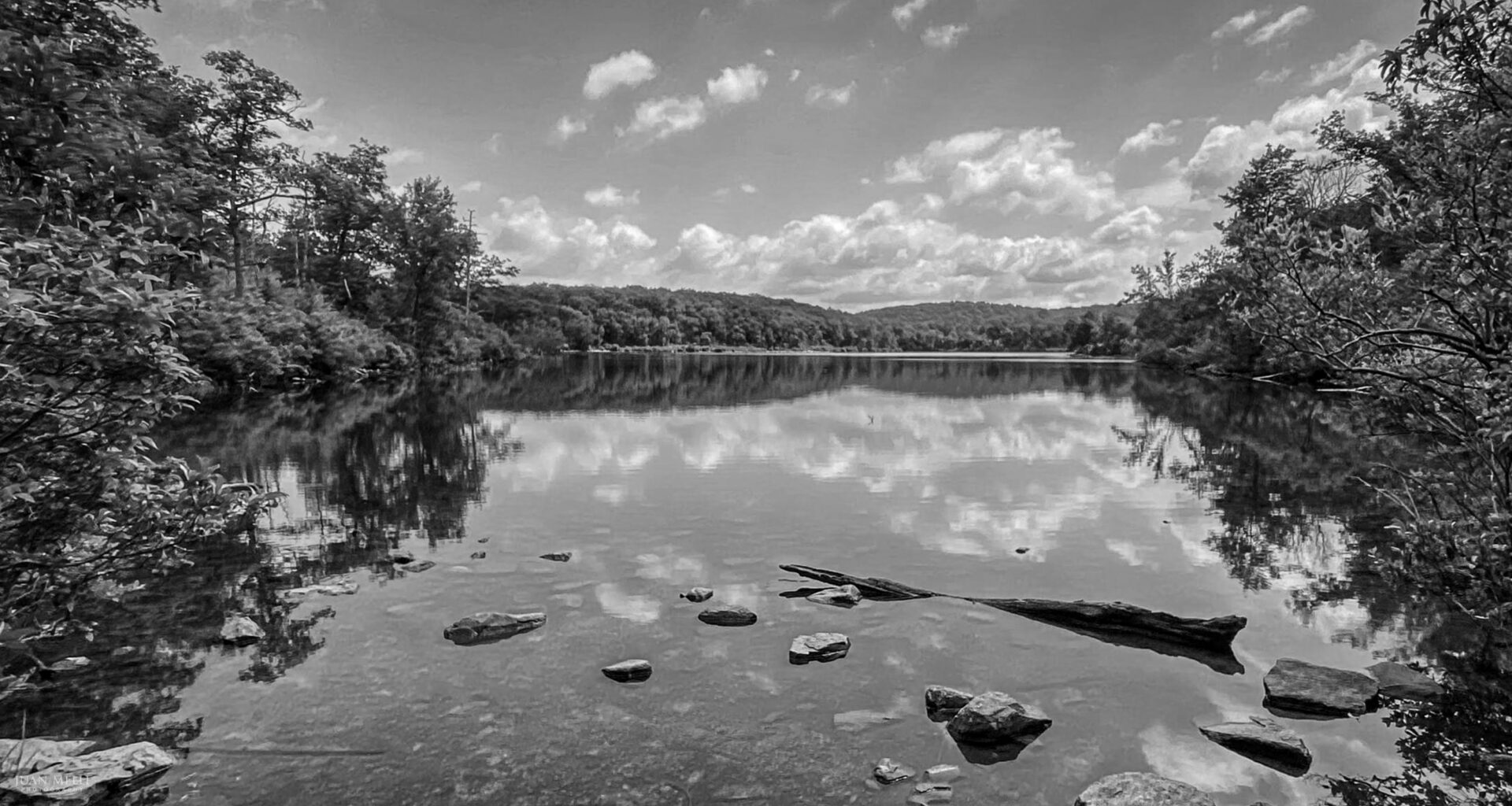
The lake was clear and full of breath, as it always had been. It was like every other day.
Above, the hardwood canopy offered welcome shade to hikers, their sore feet navigating the rocky trail skirting the shore. Most arrived via the Appalachian Trail, though the northbound thru-hikers bound for Mount Katahdin had passed through weeks earlier. All around, the mountain was alive. Water snakes weaving through the shallows, deer browsing in the understory, turkeys picking through the leaves, and black bears moving unseen through the woods. On sun-warmed rocks, a timber rattlesnake may have held perfectly still.
Below, you hover effortlessly in the September-cold water when the stillness around you breaks. Nearby, there’s a sudden dart to the surface. Your easy hover slips into a gentle drift, and the steady pulse of your gills stumbles. You overcorrect sharply. Now you’re carried by the water that once held you in place.
You draw water harder, faster, working for the breath your muscles must have. It had always come without effort.
It had started almost like every other day. Except today, you were no longer wanted.
Now the surface becomes irresistible. Like the others, you burst upwards, where the water has always held what you need.
Your fins thrash without coordination. You tilt, then spiral. The light above turns beneath you. Stillness grips you. Darkness arrives well before night.
Some of the sunfish sink, drifting down into the cold, clear dark. Others rise and are held at the surface, rocking gently. You are among them now, belly up, awaiting scavenger or the harvest.
Soon, the water is quiet again, stirred only by the September breeze.
***
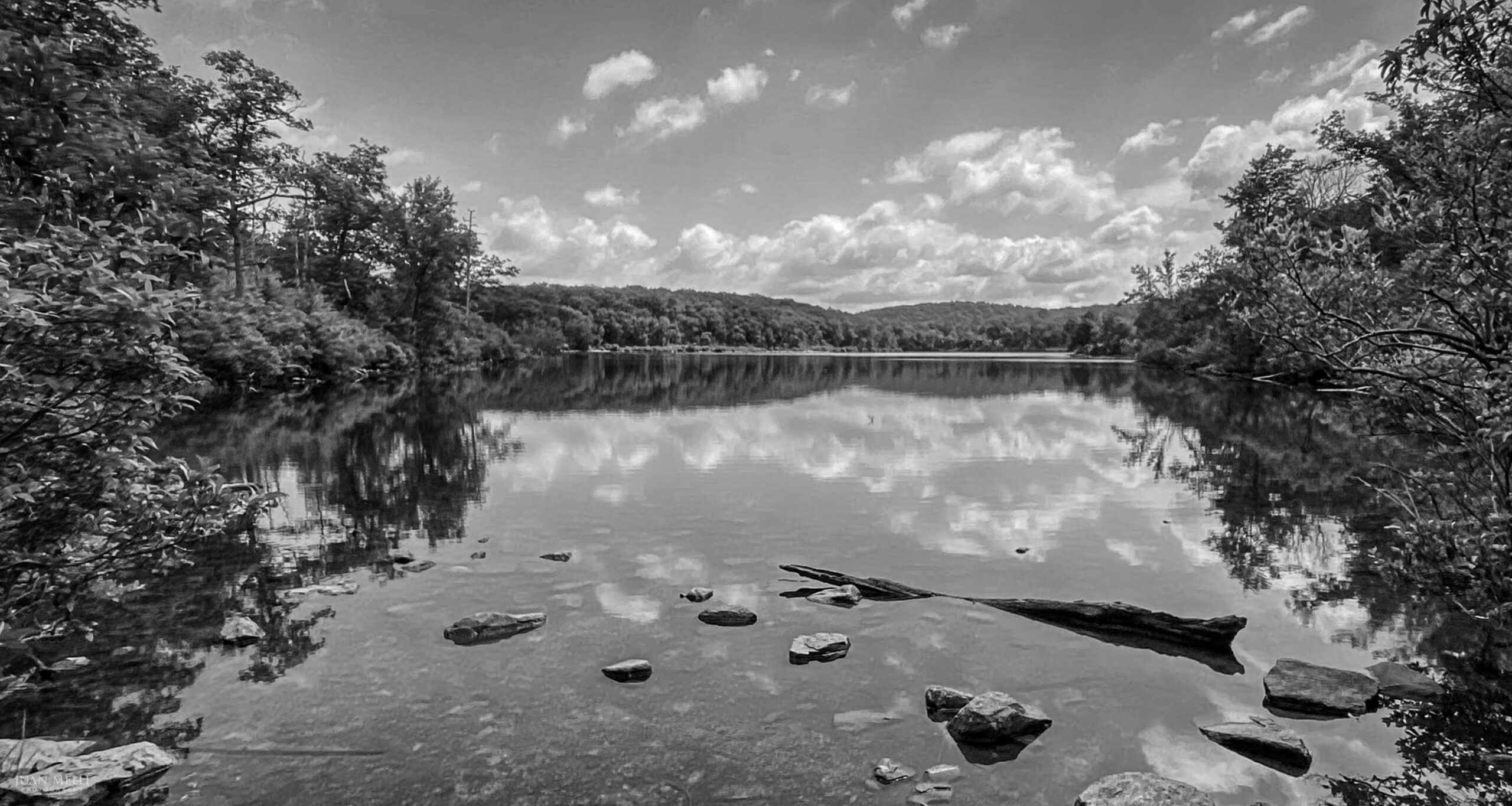
On Friday, September 9, 1960, staff from the New Jersey Division of Fish and Game dumped rotenone into Sunfish Pond. The chemical prevents cells from using oxygen to produce energy, causing suffocation at the cellular level.
Sunfish Pond is a naturally acidic lake, and its fish reflect that fact. Pumpkinseed sunfish, chain pickerel, yellow perch, brown bullheads — all tolerant species, adapted to water where trout would struggle to live. That was precisely the problem, as far as the state was concerned. A lake without trout was a lake without sportsmen, and a lake without sportsmen was a lake without purpose. The pond, in its natural form, was undesirable. It had to be controlled. It had to be changed. In the language of the state, it had to be reclaimed.
The decision was not impulsive. Beginning in 1956, state biologists measured the pond’s water at pH 4.5, strongly acidic and barely hospitable, and spent nearly twenty months running wire-cage survival experiments with various species. The data was not encouraging — the state knew the trout would not likely survive — but they poisoned the lake anyway.
Rotenone was a blunt tool to eliminate obstacles to establishing a trout-stocked lake. Chain pickerel could prey on trout populations, while the sunfish, bullheads, and perch could compete for food. To the state, that made them obstacles.
There was little appreciation for the unique ecosystem they were about to sterilize: the bullhead scouring the depths by touch and taste, the perch laying long, gelatinous ribbons of eggs, the sunfish building and guarding nests, and the pickerel waiting in stillness as it hunts. They were simply in the way.
Following the poisoning, the state reported a “harvest” of 24 pounds of “trash fish” per acre, with about 80 percent brown bullheads, along with sunfish, pickerel and perch. With the native fish eliminated, on December 2, 1960, the state stocked the lake with 2,200 brook trout fingerlings. An additional 8,000 brook trout were stocked on April 18, 1961. The trout couldn’t survive the acidity. By August 1961, the lake was empty. A third attempt to stock 5,000 brook trout followed on October 30, 1962. After finding only two surviving trout, the state attempted to stock 89 smallmouth bass in September 1964. This, too, failed, as by 1968 the lake was found to be devoid of fish.
The urge to control nature left the lake practically sterile.
It would not be the last time someone tried to remake Sunfish Pond. It would not be the last betrayal. But next time, there would be a fight.
Discover more from From My Perspective
Subscribe to get the latest posts sent to your email.